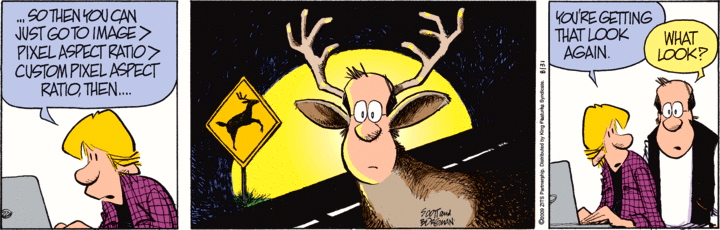
1. Copy and paste a quote from the reading that causes you to have
a strong reaction (agreement, disagreement, confusion...) and explain your
reaction.
It did not take me long in the
reading to spark a topic of comment. On
page 4, Frank Serafini states when he asks professional teachers what possible
comprehension strategies they use for making sense of a visual image or
multimodal ensemble to their students, he gets “deer-in-head-lights”
looks. One commented, “Well, you just
look at it!” “Although simply looking at an image may be a good place to start,
our students will need more support in learning how to interpret visual images
than just being told to stare at them” (Serafini, 2014, p. 4).
I agree with the statement above
that we can’t just be content to “look” – Teachers need to show their students
how to perceive deeper meaning, brainstorm inspirations that lead to the piece
that was created, and form critical analyses of different elements present in
the multimodal ensemble they are previewing.
I feel that this is a good area for
me, as an art teacher and art historian.
In art you constantly have to
“look” at images and sculptures and dig deep within the artist to carve out
meaning and interpretation. It isn’t
easy, but we (artists) have already been trained much more about perception,
interpretation and critique methods of dissecting the visual world around
us. I encourage my students to look a
lot at the world surrounding us through the web, billboard advertisements, business
signs, fonts used, colors, etc. They are
frequently asked in quick exercises to reflect on possible motivators of
certain choices businesses and graphic artists make in their brands/logos. We also sometimes branch out and students
create their own brands and companies to put some of these learned concepts to
work. This class has given me ideas of
ways to expand these lessons and discussions, so for now my ideas are filed
until the next school year. I think
every teacher needs to find ways of allowing students to explore their visual
world with so much mess of it in their minds.
This is just a thought to help the rest of you ponder how you could
bring it to your subject and class of students.
You’ll be amazed at how motivated they can be when concepts are so close
to home and so relevant for them personally.
2. Why should educators care about multimodal texts?
Serafini focuses his attention on
expressing the need for teachers to help students understand their increasing
multimodal universe. He addresses why we
as teachers need to expand our students knowledge to help them interpret, design
and utilize multimodal texts in a vast array of settings. He is trying to prepare us for what is to
come. Teachers cannot ignore where the
digital age is headed, and if we keep current with trending methods to keep our
classroom contemporary it will help everyone grow and develop down the
line. We can no longer solely rely on
print based texts anymore. Teachers need
to mix it up and provide text variety between modes for students to become more
engaged in relevant topics and traditions of their time fused with the classics
as needed. We need to grow with them or
we will be left in the dark ages and our lessons will no longer be lit with the
fire of their intrigue.
3. How is your definition of literacy different or
similar to the definition of literacy presented in the book? Or how did the
reading change or expand your definition of literacy?
In the book Serafini references
several definitions of what literacy is to society. I like to collectively reflect that literacy
is the culmination of all things we read, write, and comprehend on a daily
basis. I believe literacy is a wider scope
of things collectively used to perceive and assess our surroundings. When I think of literacy, I lean more to the
mental visualization of the way I gather, store, and react to scenarios on a
daily basis. Literacy is the way that I
can function in a world with people, reading body language, facial expressions,
non-verbal cues, and assessing situations far more complex than written word
alone. Literacy to me in a word is
survival; adaptations to lifestyle choices and constant reflections of those
decisions. I guess in this sense my
definition of literacy is different than those shared in the book, but possibly
extensions of many of the concepts presented.
The reading added to my understanding of what academics and multimodal
experts believe literacy is, or what they think it encompasses, so my store of
knowledge continues to expand, but these definitions were not new concepts to
me.
4. How can visual literacy support the development of the kinds of
reading and writing we want children to learn through schooling?
Visual literacy references the
ability to examine, interpret, and assess the visual world around you. Definitions also relate visual literacy as
the ability of “making judgments of the accuracy, validity and worth of images”
(Serafini, 2014, p.22). I believe that
visual literacy supports the more academic vision (reading/writing) we want our
children to learn through schooling by channeling variety of multimodal
resources in our classrooms. These
questions build off one another and relate back to traditional classroom text based
instruction developing and expanding to include more broad examples and modes
of exploration and discovery. They all
pertain to media literacy and teaching students to understand media content, grammar
and communication. The key words in all
of these literacies is understanding, questioning, and evaluating – we are
encouraging exploration through these new vessels of communication.
5. Find an online resources that addresses issues of visual
literacy in education link to it or embed it your blog posting and provide a
brief explanation of how it relates to this week's reading.
My video features Martin Scorsese
on the Importance of visual literacy.
Some general points he makes:
“You need to know how ideas & emotions are
expressed through a visual form. That
form could be video or whatever but it has the same rules, vocabulary and
grammar. It is important to know how to
use all of these elements to make an emotional and psychological point to an
audience. Our younger people need to
know how to use these very powerful tools”
This video directly relates to this
weeks reading because it demonstrates how successful professionals perceive visual
literacy and its importance for future generations. It also shows how visual literacy is applied
in everyday career paths and how competencies in this area could lead to huge
success down the line for motivated individuals.
6. Find an image that relates to
the ideas presented in this week's reading.
and one more for good measure:
For fun! And..this video incorporates good examples of multimodal integration concepts. A bit of visual literacy to boot ;)
References
Deer In The Headlights Blogging |
The Official Site Of Greg Gruba. (n.d.). Digital Bloggers. Retrieved June 14,
2014, from http://digitalbloggers.com/gregsg/deer-in-the-headlights-blogging/ (picture 2)
Deer in the headlights. (2012,
August 31). Arnold Zwickys Blog. Retrieved June 14, 2014, from http://arnoldzwicky.org/2012/08/31/deer-in-the-headlights/ (picture 1)
Martin Scorsese on the Importance
of Visual Literacy. (2012, June 15). YouTube. Retrieved June 14, 2014,
from https://www.youtube.com/watch?v=I90ZluYvHic
Owl City - Deer In The Headlights.
(2011, June 30). YouTube. Retrieved June 14, 2014, from
https://www.youtube.com/watch?v=gtsX8H7xSek&feature=kp
Serafini, F. (2014). Introduction. Reading the
visual: an introduction to teaching multimodal literacy (p. 4). New York:
Teachers College Press.